Source finned tube excavator radiator for Mining Machinery and Construction
Explore 30 listings for finned tube excavator radiator compatible with universal car makes and mining applications. Buyers can compare specifications including temperature resistance, surface treatments, and certifications like CE and ISO 9001 to find suitable OEM replacements.
Key considerations
Products List




Comprehensive Sourcing Guide
Strategic Sourcing Guide for Finned Tube Excavator Radiators
The global construction and mining sectors rely heavily on the thermal efficiency of heavy machinery, with the excavator radiator serving as a critical component for engine longevity. When sourcing a finned tube excavator radiator, buyers must navigate a complex landscape of technical specifications, material standards, and compliance requirements. The following guide synthesizes observed market data and technical attributes to provide a disciplined approach to procurement, ensuring that the selected components meet the rigorous demands of high-performance applications.
Technical Specifications and Core Design Attributes
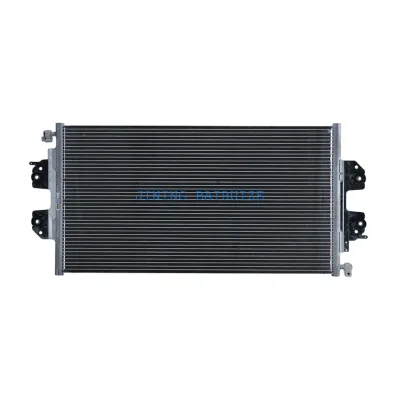
Understanding the physical and functional specifications of a finned tube radiator is the first step in any successful procurement strategy. The core design typically involves a tube-fin configuration, where coolant flows through tubes while air passes through the fins to dissipate heat. This specific architecture is observed in products labeled with the component type "Radiator" and the core type "Tube-fin." The material composition is a decisive factor in performance; observed market data indicates that "Aluminium" is a primary body material, offering a favorable strength-to-weight ratio and excellent thermal conductivity. However, buyers must verify if the specific unit utilizes "Cooper" (Copper) or other alloys, as material choice directly impacts heat transfer rates and corrosion resistance.
The physical dimensions of the radiator are equally critical. Market listings show a wide variance in standard component sizes, with specific dimensions such as "1080600150" and "96065856" appearing in product descriptions. These figures, often denoted in millimeters, dictate the physical footprint required for installation. Buyers should not assume a universal fit; instead, they must cross-reference the "prod_model" or OEM numbers, such as "OEM 8106101632481061016396" or "OEM 3465005603," against their machinery's existing cooling system. The working environment temperature is another key specification, with observed data suggesting a functional range of "40-50°C." This indicates the unit is designed for high-temperature operational zones, a common requirement for mining and heavy excavation tasks.
Compliance, Certification, and Material Standards
In the B2B procurement of industrial machinery parts, certification serves as a proxy for quality assurance and regulatory compliance. The observed market data highlights a consistent presence of "CE" and "ISO 9001" certifications. Specifically, some listings reference "ISO 9001: 2000" or broader standards like "ISO 9001:ISO 9001:RoHS,CE." These certifications suggest that the manufacturing processes adhere to international quality management systems and environmental directives. However, buyers must exercise caution; the presence of a certification claim does not guarantee that every unit in a batch is certified, nor does it replace the need for third-party verification.
Beyond general certifications, the material and manufacturing standards are governed by a diverse array of international norms. The supply chain data indicates adherence to standards including "DIN, ASTM, GOST, GB, JIS, ANSI, BS, ASME, and AISI." This extensive list reflects the global nature of the supply chain, where a single product might be manufactured to meet multiple regional standards. For instance, "GB" refers to Chinese National Standards, while "DIN" and "ASTM" are prominent in European and American markets, respectively. When evaluating a supplier, buyers should request documentation proving that the specific batch of radiators meets the standard relevant to their local jurisdiction. Additionally, the "Standard Component" designation implies that some units are built to generic specifications, whereas others may be "TAILOR-MADE," requiring a deeper review of the custom engineering process.
Cost Drivers and Pricing Dynamics
The pricing of finned tube excavator radiators is influenced by a combination of material costs, customization levels, and packaging requirements. The observed price range in the market spans from "10 to 2000" USD, a wide variance that reflects differences in scale, material purity, and OEM specificity. Lower-priced units often correspond to generic models or those with minimal surface treatment, while higher-priced units likely involve complex OEM specifications, advanced surface treatments like "Spray-Paint," or specialized "Wooden Package" or "Wooden Case" protection.
Material costs are a primary driver, particularly given the reliance on "Aluminium" and potential "Cooper" usage. Fluctuations in global metal markets can significantly impact the final unit price. Furthermore, the "Customization" attribute plays a pivotal role. Products marked as "Customized" or "Tailor-Made" generally command a premium due to the engineering and tooling required to produce non-standard dimensions or configurations. The Minimum Order Quantity (MOQ) also affects unit economics, with observed ranges between "1 and 20" units. Buyers purchasing in smaller quantities may face higher per-unit costs, whereas bulk orders can leverage economies of scale. It is essential to note that "Sea and Air Freight Allowed Package" options may incur additional logistics costs that are not always reflected in the base product price.
Typical Applications and Operational Environments
The versatility of the finned tube excavator radiator allows it to serve in various high-stress environments. The primary application field is identified as "Machinery," with specific usage noted for "Mining" and general "Excavator" operations. The "Universal" car make attribute suggests that these components are designed to be adaptable across different brands of heavy equipment, provided the physical and hydraulic interfaces match. The "New" condition of the products indicates they are intended for primary installation or major overhauls rather than as secondary repair parts for older, degraded systems.
The operational environment is a critical consideration for longevity. The observed "Working Environment Temperature" of "40-50°C" suggests these radiators are engineered for hot climates or high-load scenarios where engine temperatures are elevated. The "Temperature Resistant" performance attribute further supports this, indicating the materials and seals are designed to withstand thermal stress without degrading. In mining applications, where dust and vibration are prevalent, the "Without Processing" or "Spray-Paint" surface treatments become vital for corrosion resistance. Buyers must ensure that the selected radiator's performance capabilities align with the specific thermal load of their machinery, as underspecification can lead to overheating and catastrophic engine failure.
Supplier Evaluation and Quality Assurance Protocols
Evaluating a supplier for heavy machinery components requires a rigorous assessment of their production capabilities and quality control measures. The supply chain data reveals that many suppliers offer "Online support" and "Video outgoing-inspection," which are valuable tools for remote verification of product quality. These services allow buyers to visually inspect the radiators before shipment, checking for surface defects, weld integrity, and correct labeling. The "Video outgoing-inspection: Provided" attribute is a strong indicator of a supplier's confidence in their manufacturing process and willingness to be transparent.
When assessing quality, buyers should look for evidence of adherence to the "Standard Component" or "Tailor-Made" processes. The "Surface Treatment" options, ranging from "Without Processing" to "Spray-Paint," should be verified against the intended application. For example, a radiator intended for a dusty mining environment may require a more robust protective coating than one used in a controlled indoor setting. Additionally, the "Warranty" period, observed as "1 Years," is a standard metric for supplier confidence. Buyers should clarify the terms of this warranty, including what constitutes a defect and the process for claims. The "HS" code "87089190" is also a useful reference for customs and regulatory compliance, ensuring the product is classified correctly for international trade.
Long-Term Procurement and After-Sales Considerations
Sourcing a finned tube excavator radiator is not merely a transactional event but a long-term partnership that impacts operational uptime. The "After-sales Service Provided" category, specifically "Online support," suggests that suppliers are available to assist with troubleshooting and technical queries post-delivery. However, buyers should also consider the availability of spare parts and the lead time for replacements. The "prod_packing" methods, which include "in Nude," "Carton," "Wooden Package," and "Wooden Case," indicate varying levels of protection during transit. Selecting a robust packaging method is crucial for preventing damage during shipping, especially for heavy components like radiators.
The "Customization" and "Customized" attributes highlight the potential for future adaptability. As machinery fleets age or specifications change, the ability to source custom-fitted radiators becomes essential. Buyers should establish a relationship with suppliers who can accommodate "Tailor-Made" requests, ensuring a steady supply of compatible parts. Furthermore, the "Condition: New" status implies that buyers should prioritize suppliers who guarantee the freshness of their inventory, avoiding refurbished or reconditioned units unless explicitly requested. By focusing on suppliers with strong quality control, clear certification documentation, and reliable after-sales support, buyers can mitigate the risks associated with equipment downtime and ensure the continued efficiency of their excavator fleets.
Summary of Key Procurement Parameters
To facilitate a streamlined decision-making process, the following table summarizes the critical parameters observed in the market for finned tube excavator radiators. This comparison aids in quickly identifying the necessary attributes for a specific procurement need.
| Parameter Category | Observed Attributes & Standards | Verification Requirement |
|---|---|---|
| Core Component | Tube-fin, Radiator, Engine | Match OEM model numbers (e.g., 360, 312D) |
| Material | Aluminium, Cooper (Copper) | Confirm alloy grade and purity |
| Dimensions | 1080600150, 96065856, mmmmmm | Verify exact fit against machinery specs |
| Certifications | CE, ISO 9001, RoHS, TS, ISO | Request valid certificates for specific batch |
| Standards | DIN, ASTM, GOST, GB, JIS, ANSI, BS, ASME, AISI | Ensure compliance with local regulatory standards |
| Surface Treatment | Without Processing, Spray-Paint | Select based on environmental exposure |
| Packaging | Nude, Carton, Wooden Package, Wooden Case | Choose based on shipping distance and fragility |
| Warranty | 1 Years | Review terms for defect coverage |
| Application | Excavator, Mining, Machinery | Confirm suitability for specific operating temperature |
| Customization | Available, Customized, Tailor-Made | Define requirements early for lead time estimation |
By adhering to these structured guidelines and verifying the specific attributes against the actual product offerings, buyers can secure high-quality finned tube excavator radiators that ensure operational reliability and safety in demanding industrial environments.
FAQs
What certifications do finned tube excavator radiators typically have?
These radiators commonly carry CE and ISO 9001 certifications. Some listings also reference ISO 9001:2000 or RoHS compliance. Buyers should verify that specific batches meet these international quality standards before purchase.
Which materials are used for the body of these radiators?
Aluminium is the primary body material observed in the market. Some units may utilize Cooper or other alloys. The choice of material impacts thermal conductivity and corrosion resistance for heavy machinery applications.
Can I find custom or tailor-made finned tube radiators?
Yes, customization is available for these components. Many suppliers offer tailor-made options to fit specific machinery models. This allows for unique dimensions or configurations beyond standard OEM specifications.
What is the typical warranty period for these excavator parts?
The standard warranty period observed is one year. This coverage applies to defects in materials and workmanship. Buyers should review specific terms regarding claims and conditions for the warranty.
How are these radiators packaged for international shipping?
Packaging options include wooden cases, cartons, or nude packing. Some suppliers allow sea and air freight packages. The choice depends on the shipping distance and the fragility of the component.
What surface treatments are applied to these radiators?
Surface treatments range from without processing to spray-paint. The selection depends on the working environment, such as mining or general machinery use. Protective coatings help resist corrosion in harsh conditions.
Which standards do these radiators comply with?
Products often comply with DIN, ASTM, GOST, GB, JIS, and ANSI standards. This ensures compatibility with global machinery requirements. Buyers must confirm the specific standard relevant to their local jurisdiction.